Top 10 Forklift Collision Detection Systems You Need to Know?
In today's fast-paced warehouse environments, safety is paramount. Forklift accidents can lead to serious injuries and costly damages. To mitigate these risks, a Forklift Collision Detection System is essential. These systems utilize advanced technologies to prevent accidents by detecting obstacles in the forklift's path.
Understanding the top system options available can enhance workplace safety. Different systems use various sensors and alerts. Some rely on cameras, while others employ ultrasonic technology. Each system has its strengths and weaknesses. It's crucial to evaluate how these features align with your operational needs.
Investing in a reliable Forklift Collision Detection System not only protects employees but also improves overall efficiency. A well-chosen system reduces downtime and helps maintain a productive work atmosphere. However, not every solution fits every situation. Assessing your unique needs and potential challenges is necessary for making an informed decision.
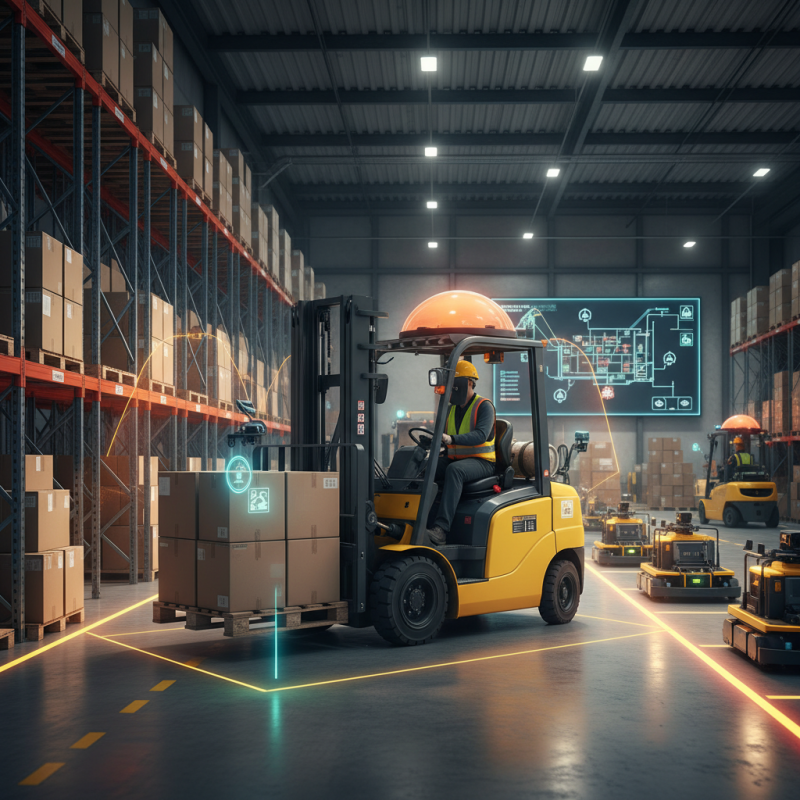
Importance of Forklift Collision Detection Systems in Warehousing
In the fast-paced environment of modern warehousing, forklift collisions pose significant risks. According to a report by the National Institute for Occupational Safety and Health (NIOSH), forklifts contribute to about 34% of all warehouse-related injuries. The need for effective collision detection systems is paramount in ensuring worker safety. These systems prevent accidents by alerting operators when approaching obstacles, thus decreasing the likelihood of collisions.
Recent advancements in technology have improved the efficiency of these systems. Sensors and cameras integrated into forklifts can detect nearby objects and activate alerts in real-time. A study indicated that implementing such systems could reduce accidents by 30%. However, many warehouses still operate without this vital technology, leaving workers vulnerable. Investing in collision detection not only enhances safety but also boosts operational efficiency.
Despite the clear benefits, some companies hesitate to adopt these technologies. Concerns about costs and potential system failures linger. Additionally, there is a need for ongoing training to ensure that employees properly understand how to utilize these systems. Continuous reflection on safety practices is necessary to create a proactive safety culture in warehousing environments.
Key Features to Look for in Forklift Collision Detection Systems
When looking for an effective forklift collision detection system, several key features stand out. Safety is paramount in any warehouse environment. An ideal system should offer real-time monitoring of forklift movements. This ensures immediate alerts in case of potential collisions. Furthermore, integration capabilities with existing warehouse management systems can significantly enhance operational efficiency.
Another essential feature is sensor technology. Systems equipped with advanced sensors can detect obstacles in the forklift's path. Cameras and LIDAR integration can provide a broader perspective. These technological tools help create a safer workspace. They must be reliable under various conditions, such as poor lighting or crowded aisles.
Moreover, user-friendly interfaces play a crucial role. Staff should be able to easily understand and operate the system. Complexity can lead to errors and reduce overall safety. Regular training and updates are necessary to maintain efficiency. Ultimately, while many features contribute to a collision detection system’s effectiveness, the ultimate goal should always be to enhance safety and reduce the risk of accidents.
Top Technologies Used in Forklift Collision Detection Systems
Forklift collision detection systems are essential in maintaining workplace safety. Advanced technologies protect both personnel and equipment. These systems primarily use sensors, cameras, and alarms to detect potential collisions. Sensors can be ultrasonic, infrared, or laser-based, each having unique strengths. For instance, ultrasonic sensors excel in detecting nearby objects, while infrared sensors work well in low-light conditions.
Another significant technology in these systems is computer vision. Cameras, paired with sophisticated algorithms, analyze surroundings in real time. They help identify obstacles and alert operators instantly. Some systems even implement machine learning. This allows systems to adapt and improve detection accuracy over time.
While these technologies enhance safety, they aren't foolproof. Misalignment or obstructions can lead to sensor failures. Regular maintenance is crucial to ensure reliability. Employers must train staff effectively on these systems. Human error still plays a role in collision incidents, despite technological advances. Monitoring and continuous improvement are fundamental in creating a safe working environment.
Comparison of Leading Forklift Collision Detection Systems Available Today
In modern industrial settings, forklift collisions pose serious risks. Many companies are now prioritizing safety with advanced collision detection systems. These systems utilize various technologies, including sensors and cameras, to prevent accidents. They can detect obstacles, monitor blind spots, and provide alerts to operators. This proactive approach enhances safety in high-traffic areas.
When evaluating these systems, consider their response time and accuracy. Some systems use detection ranges that may not cover the entire working area. A delay in alerting operators can lead to near misses. Understanding the limitations of each system is crucial. Analyze how each technology works in real-world scenarios.
Additionally, integration with existing safety protocols is essential. Not all systems fit seamlessly with current operations. Training for forklift operators is necessary to maximize effectiveness. Keeping safety as a priority can lead to better operational efficiency. A comprehensive review of available systems will guide companies in making informed decisions about their safety investments.
Comparison of Leading Forklift Collision Detection Systems
Case Studies: Success Stories Using Forklift Collision Detection Systems
Forklift collision detection systems are becoming essential in ensuring workplace safety. One notable case involved a large warehouse that faced frequent accidents. The implementation of an advanced detection system significantly reduced collisions and improved overall efficiency. Workers felt safer, boosting morale. However, there were initial hiccups, such as employee resistance to the new technology. Proper training was crucial to overcoming these obstacles.
In another case, a manufacturing facility installed such a system to enhance operations. After a series of incidents, management recognized the need for change. The new system quickly alerted operators of nearby pedestrians and obstacles. This led to fewer injuries and minimized downtime. Nonetheless, the facility struggled with system calibration. Regular adjustments proved necessary to maintain accuracy and effectiveness. These stories highlight the transformative impact of collision detection systems. They underline the balance between technology and human factors in workplace safety.
Top 10 Forklift Collision Detection Systems You Need to Know
| System Name | Technology Used | Key Features | Case Study Highlight |
| System A | Lidar | Real-time alerts, Predictive analytics | Reduced accidents by 30% in warehouse settings |
| System B | Ultrasonic Sensors | Proximity detection, Integration with forklifts | Improved safety compliance in busy docks |
| System C | Camera Systems | 360-degree vision, AI processing | Enhanced visibility led to 25% fewer incidents |
| System D | Radar Technology | Weather-resistant, Long-range detection | Successfully minimized near misses |
| System E | RFID Tags | Tag tracking, Alert systems | Enhanced inventory safety measures |
| System F | Vision Systems | Image recognition, Object identification | Significant decrease in collision rates |
| System G | Gyroscope Sensor | Tilt detection, Stability monitoring | Prevented tip-overs in tight spaces |
| System H | Integrated Software | Data analytics, Performance tracking | Boosted overall operational efficiency |
| System I | Telematics | Fleet tracking, Remote diagnostics | Improved maintenance schedules |
| System J | Beacon Technology | Location awareness, Collision avoidance | Reduced pedestrian accidents in factories |



 Distributors
  SDS Download
  Contact