Why Choose an Injection Machine Robot for Your Manufacturing Needs?
In today's rapidly evolving manufacturing landscape, the choice of machinery plays a critical role. Companies are increasingly turning to the Injection Machine Robot for its efficiency and precision. John Smith, an industry expert, states, “Automation through injection machines is the future of manufacturing.” This insight underscores the growing trend toward automation.
Injection Machine Robots streamline production processes. They reduce cycle times and enhance product quality. However, integrating these machines isn't without its challenges. Manufacturers must address workforce adaptation and initial investment costs. The balance between human touch and robotic precision is crucial.
As the demand for efficiency rises, so does the pressure to innovate. Companies must reflect on their current systems. Are they ready for this shift? The potential benefits are clear, but embracing technology requires careful consideration. Investing in an Injection Machine Robot could redefine your production capability.
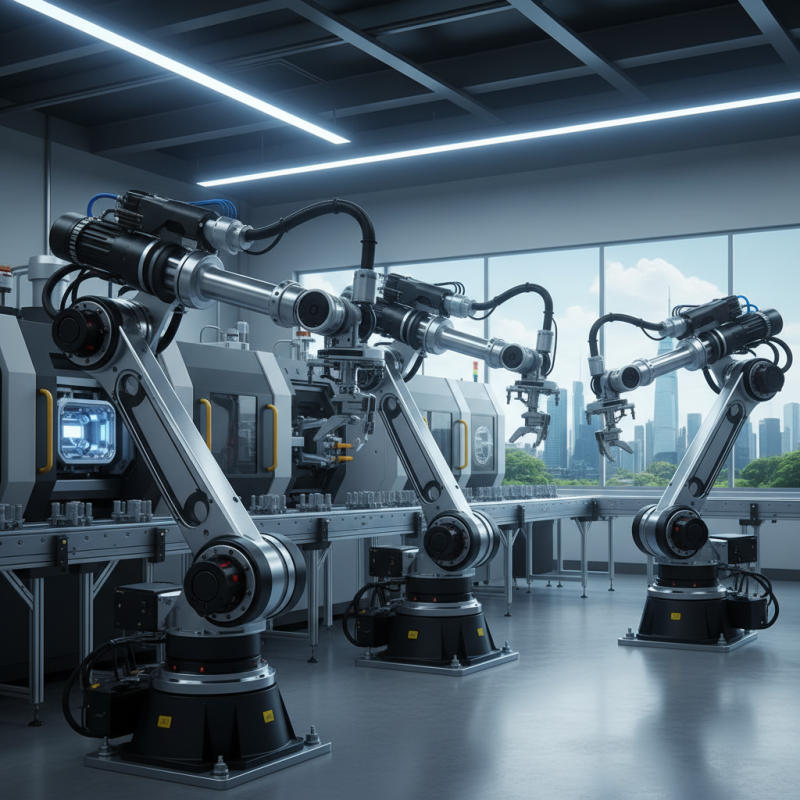
The Evolution of Injection Molding Technology in Manufacturing
Injection molding technology has evolved significantly. Over the past few decades, advancements in robotics have become a driving force in this sector. According to a market report by ResearchAndMarkets, the global injection molding market is projected to reach $270 billion by 2027. This growth indicates a strong demand for efficient, automated solutions.
Injection machine robots enhance precision and speed. They can operate continuously, minimizing human error. In fact, studies show that automation can increase production efficiency by up to 30%. However, implementing these robots requires careful planning. Many manufacturers overlook the importance of training personnel to operate and maintain robotic systems properly.
Tip: Invest in regular training for your team. This will ensure your workforce adapts to new technologies efficiently.
Challenges do exist, though. Not all molds suit robotic automation. Some intricate designs may still require manual handling. Also, initial costs can be high. Firms must analyze long-term benefits versus upfront investments. Balancing automation with human skills can yield the best outcomes.
Tip: Assess your specific production needs. Not every component needs complete automation. Stay flexible.
Key Benefits of Implementing Injection Machine Robots
Injection machine robots are transforming the manufacturing landscape. These robots automate injection molding processes. This leads to increased efficiency and precision. With consistent performance, they minimize human error. Operators can focus on quality control instead of repetitive tasks.
One key benefit is reduced production time. Robots work faster than a human can, consistently. This is crucial for meeting tight deadlines. Additionally, energy efficiency is significant. Robots use less power than traditional machinery, lowering operational costs. Integrating these machines may require training, yet the long-term gains are substantial.
Another advantage is scalability. As production demands grow, robots can adapt quickly. They accommodate various designs and materials effortlessly. Some manufacturers hesitate to invest due to initial costs. However, the return on investment can be notable. Continuous maintenance may be necessary, yet the results often justify the effort.
Industry Statistics on Productivity Gains from Automation
As industries evolve, automation becomes essential. Recent studies highlight significant productivity gains through injection machine robots. A report from the International Federation of Robotics reveals that automation can increase production efficiency by up to 40%. This is not just a number; it means faster turnaround times and better resource allocation.
Consider the automotive sector, where automation integration has led to substantial cost savings. Statista indicates that companies adopting robotic processing have seen a 30%% reduction in operational costs. However, this shift isn't without challenges. Some manufacturers report difficulties in retraining staff to work alongside robots. Adaptability remains a critical consideration in this changing landscape.
Moreover, a survey by McKinsey & Company shows that companies that automate can boost their output by 25%% within the first year. Yet, the path to automation is not always smooth. There are ongoing debates about job displacement and the necessary skills for future workers. Balancing these factors is crucial for sustainable growth in the manufacturing sector.
Comparative Costs: Human Labor vs. Injection Machine Robots
When comparing human labor and injection machine robots, the cost factors are crucial. Human workers come with salaries, benefits, and training expenses. The initial investment in staff can be high, especially in specialized roles. Over time, labor costs accumulate, impacting overall production budgets. Robots, on the other hand, involve higher upfront costs. Yet, they often lead to reduced operational costs in the long run.
Robots provide consistency and precision. They work tirelessly, reducing errors in production. This reliability can decrease waste and rework costs. However, maintenance costs can add up, along with the need for technical expertise. Companies must evaluate if the financial commitment to automation justifies potential savings.
While a robot can perform repetitive tasks efficiently, there's a risk of over-reliance. Human skills are essential for complex problem-solving and creativity. Balancing human labor with robotic solutions can be challenging. Companies need thorough analyses to ensure optimal cost-effectiveness in their manufacturing landscape.
Cost Comparison: Human Labor vs. Injection Machine Robots
Future Trends in Injection Molding Robotics and Automation
The landscape of injection molding robotics is evolving rapidly. Businesses must stay ahead of trends to thrive. Automation is no longer just a luxury; it’s a necessity. Companies are adopting robotics for efficiency and precision. However, many do not fully understand the impact of these trends on production.
Next-gen robots are becoming smarter. They analyze data in real-time, adjusting operations on the fly. This capability reduces downtime significantly. Yet, not every business is ready for such advanced technology. Some may struggle with the initial costs and integration challenges. It’s essential to weigh these factors before deciding.
Sustainability is another major trend influencing robotics. Eco-friendly materials are gaining traction in manufacturing. Robots help optimize resource use and reduce waste. Still, businesses must remain vigilant. Adopting new technologies is not without risks. Companies should consider how to balance innovation with their current operations. Awareness of potential pitfalls is crucial for progress.



 Distributors
  SDS Download
  Contact